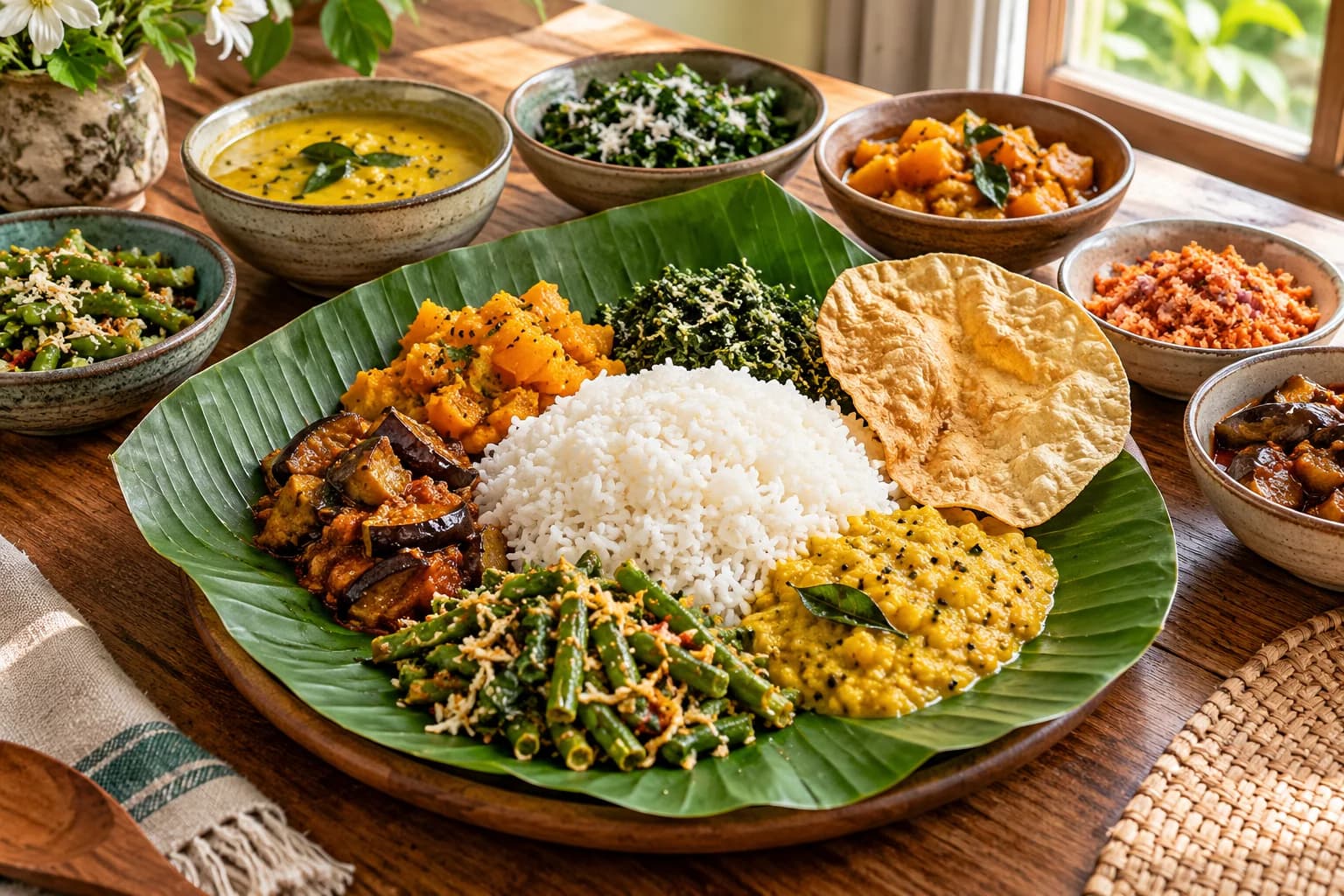
Sri Lankan food is generous, fragrant and built around rice, coconut and spice. It has been shaped by Sinhala, Tamil, Muslim, Malay, Dutch and Portuguese traditions — and it is one of the great pleasures of a trip here.
Rice and curry
The everyday meal is not one curry but many: a mound of rice surrounded by small dishes of dhal, vegetables, a meat or fish curry, pickles and sambols. Pol sambol — freshly grated coconut with chilli, onion and lime — appears with almost everything.
Hoppers, kottu and short eats
- Hoppers (appa): bowl-shaped pancakes of fermented rice flour and coconut milk, crisp at the edges. Try an egg hopper, with an egg cooked in the middle.
- String hoppers (idiyappam): delicate nests of steamed rice noodles, usually eaten with a light curry at breakfast.
- Kottu roti: chopped flatbread stir-fried with vegetables, egg or meat on a hot griddle — listen for the rhythmic clatter of the blades.
- Short eats: savoury snacks such as rolls, patties and vadai, sold in bakeries and cafés.
Dishes worth seeking out
- Lamprais: a Dutch Burgher dish of rice, curries and accompaniments baked together in a banana leaf.
- Fish ambul thiyal: a southern sour fish curry cooked with goraka, dry and intensely flavoured.
- Kiribath: milk rice, cut into diamonds and served at celebrations and the Sinhala and Tamil New Year.
- Watalappan: a spiced jaggery and coconut custard, often served at festive meals.
Tea, king coconut and fresh juices
Ceylon tea is grown across the Hill Country, and a visit to a tea estate is the best way to taste it fresh. On a hot day, look for roadside king coconuts (thambili), and try wood-apple or fresh lime juice.
Tips for eating well
- Spice levels vary — ask for dishes "less spicy" if you prefer, and there is always rice and coconut to balance the heat.
- Vegetarians eat very well: many curries are vegetable- or dhal-based.
- Traditionally, rice and curry is eaten with the right hand. Cutlery is always available.
- Let us know about any dietary requirements or allergies before you travel so we can brief hotels and your driver-guide.


